All episodes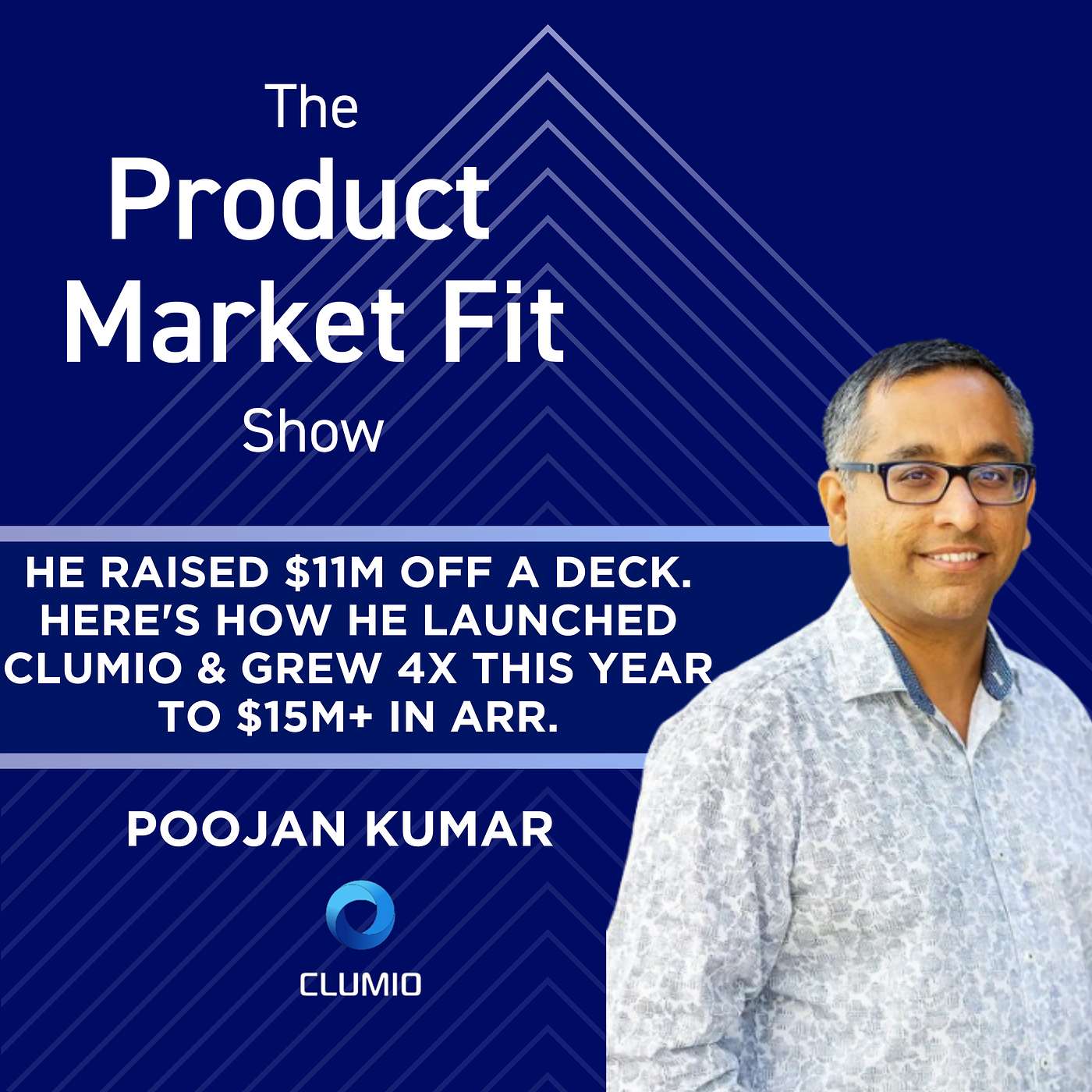
Episode 19May 6, 2024
He raised $11M off a deck. Here's how he launched Clumio & grew 4x to over 8-figures in ARR. | Poojan Kumar, Founder of Clumio
 Spotify
 Apple Podcasts
About this episode
Poojan is a multi-time successful founder. He raised $60M for his first startup and exited. He just raised a $75M Series D at his current startup. But it wasn't always easy.
- In his first startup, he had to hover beside conference booths for hours to land his first customer.
- He gave his product away for free to the first several customers.
- It took him 6 years to cross $10M in ARR
- In his first startup, he had to hover beside conference booths for hours to land his first customer.
- He gave his product away for free to the first several customers.
- It took him 6 years to cross $10M in ARR
Why you should listen:
- Learn exactly how a successful repeat founder thinks about team structure in the early days. Though he raised $11M, he spent only a third of it.
- Understand why sometimes giving your product away for free is the best way to get off the ground.
- Hear about specific sales tactics you may want to use to get your first customers.
Timestamps:
(00:00:00) Intro
(00:01:30) Before Clumio
Timestamps:
(00:00:00) Intro
(00:01:30) Before Clumio
(00:05:53) Raising 7 Million Dollars off a Power Point
(00:09:35) Starting Clumio
(00:16:41) Starting Conversations with Customers
(00:20:08) Finding and Solving the Real Pain Points
(00:24:18) The Stage Between Series A and B
(00:26:02) Keep your Team Lean
(00:27:47) Finding True Product Market Fit
(00:29:06) One Piece of Advice
Don't miss the next one
New episodes drop weekly.
Pick your platform and never miss a founder story.
Or pick another appTranscript
The full conversation.
Poojan
0:00
I
say
some
things
become
easier.
You
can
say
maybe
fundraising
becomes
easier.
But
overall,
the
startup
experience
doesn’t
become
easy.
It’s
as
hard
every
single
time.
It’s
fun
every
single
time.
If
you
enjoy
that
journey,
it’s
as
hard
every
single
time,
but
nobody
cares.
Every
person
you’re
working
with,
employee,
anybody,
or
investor,
it
doesn’t
matter
what
happened
in
the
past.
It’s
what’s
happening
today.
Pablo
0:21
Welcome
to
the
Product
Market
Fit
Show,
brought
to
you
by
Mistral,
a
seed-stage
firm
based
in
Canada.
I’m
Pablo.
I’m
a
founder
turned
VC.
My
goal
is
to
help
early-stage
founders
like
you
find
product
market
fit.
Poojan,
welcome
to
the
show.
Poojan
0:39
Thank
you,
Pablo.
Really
appreciate
doing
this.
Pablo
0:41
I’m
looking
through
Crunchbase
here,
which
is
usually
how
I
start
before
I
jump
into
these.
You
started
this
company
in
2017,
Clumio.
You
raised
$11
million
Series
A.
Two
years
later,
you
get
preempted
on
this
$40
million
Series
B.
From
a
fundraising
perspective,
it’s
like
a
founder’s
dream
<laugh>
But
I
think
talking
to
you
earlier,
a
lot
of
the
success
you’re
having
now
with
Clumio,
especially
on
the
fundraising
side,
had
to
do
with
what
you
accomplished
before.
You’re
a
repeat
founder
and
you
had
another
company
before
Clumio
that
was
acquired,
raised
about
$60
million
and
was
ultimately
acquired.
Maybe
let’s
start
there.
What
was
your
first
company?
Maybe
walk
us
through
what
you
were
working
on
and
what
those
early
days
was
like,
what
the
origin
story
was
for
PernixData,
your
first
company.
Before Clumio
Poojan
1:30
Absolutely.
I
think
if
you
look
at
my
career,
I
spent
about
10
years
at
Oracle
and
a
couple
years
at
VMware
before
I
started
the
first
company.
I’ve
really
not
been
part
of
startups
if
you
may,
or
for
that
matter,
even
raised
capital
and
things
like
that.
It
was
extremely
hard,
and
it’s
just
basic
things
as
you
can
imagine,
even
getting
an
introduction
to
a
VC.
Which
VC
do
you
go
to?
How
do
you
go
figure
that
out?
Because
obviously
there
is
a
lot
of
options
available
in
the
Bay
Area,
but
then
how
do
you
approach
it?
Just
even
more
simpler
things
like,
okay,
where
do
you
go
and
what
does
the
deck
look
like?
You
want
to
raise
a
seed.
What
does
a
deck
look
like?
What
is
needed
in
a
Series
A
deck
if
you’re
trying
to
raise
Series
A
and
things
like
that?
I
think
some
of
those
basic
things,
which
today
I
can
take
for
granted.
Pablo
2:23
Maybe
just
to
set
context
like,
PernixData,
you
were
at
Oracle
for
nine
years.
You
were
at
VMware.
You
were
doing
well,
and
then
to
leave
and
to
start
a
startup,
how
did
that
happen?
Why
did
you
decide
to
do
that
back
then?
Poojan
2:36
That
was
always
an
entrepreneur
by
heart.
I
did
my
grad
school
at
Stanford.
I
almost
dropped
out
of
Stanford,
wanted
to
do
a
startup
back
then.
Thankfully,
I
didn’t
because
bubble
burst.
But
then
after
spending
the
time
at
Oracle
–
and
I
was
fortunate
to
be
in
the
right
place
at
the
right
time,
seeing
some
growth
at
Oracle
with
a
new
product
that
I
was
part
of
in
the
early
days.
Throughout
my
career,
I’ve
always
worked
on
new
stuff
and
started
new
things.
That
was
the
desire
that
I
ultimately
decided
to
put
into
action.
Pablo
3:03
What
was
Pernix
?
Poojan
3:05
Pernix
was
a
storage
startup,
you
can
say,
basically
trying
to
accelerate
storage
environments
with
this
new
device
back
then
that
was
coming
in
in
enterprise
servers
called
Flash,
which
became
prominent
in
laptops,
and
your
iPhones,
and
stuff
like
that,
and
started
coming
into
the
enterprise.
Pablo
3:25
When
you
get
this
idea
back
then,
do
you
just
jump
ship
and
go
all
in?
Do
you
raise
money
first?
How
did
you
time
that
exit?
Poojan
3:32
In
both
the
startups
I
have
done,
I
typically
said,
most
of
my
things
are
more
applicable
to
B2B,
not
B2C.
B2C
works
different.
But
in
B2B,
there’s
couple
of
things.
If
you
can
go
build
a
quick
prototype
or
whatever,
you
and
your
co-founders
leave
your
job,
build
a
quick
prototype
and
show
something,
that’s
one
way
to
go
raise
capital.
Or
in
both
my
companies
at
least,
there
was
no
easy
way
to
do
that.
The
initial
alpha,
beta,
whatever
you
want
to
call
it,
did
require
10,
15,
20
engineers
in
a
good
amount
of
time,
call
it
year,
year
and
half.
In
both
cases,
we
had
to
go
raise
capital
on
an
idea,
on
basically
the
idea,
the
market,
and
the
team.
The
idea
is
to
basically
show
that
it’s
a
unique
thing.
Nobody
is
doing
it
right
now.
Market
is
really,
if
I
go
and
build
it,
this
is
a
market
and
this
is
a
problem
it
solves.
The
team,
just
to
give
the
confidence
that,
yeah,
ultimately
I’m
asking
for
a
multimillion
dollar
check,
but
this
is
the
team
is
capable
to
go
and
execute
and
build
on
this.
In
both
cases,
we
basically
had
gone
that
route.
In
Pernix
case,
we
went
and
raised
$7
million
Series
A
with
basically
a
PowerPoint
deck
with
all
the
three
things.
Then
Clumio
did
the
same
thing.
Again,
as
I
said,
it,
it
varies
based
on
what
you’re
doing.
In
my
case,
we
had
to
do
that
because
there’s
no
way
to
kind
of
–
and
there’s
no
point
in
building
a
prototype
and
showing
that
we
had
the
background
to
go
and
say
that,
yes,
we
can
build
this.
Now,
it
was
about
going
and
convincing
somebody
that,
yes,
it’s
unique
and
there
is
a
big
market
to
go
after.
Pablo
5:07
How
did
you
do
that?
With
Clumio,
I
get
it,
because
at
that
point,
you’re
a
founder
with
a
large
exit.
You’re
proven.
When
you’re
repeat
founder,
successful
repeat
founder,
it’s
frankly
just
a
lot
easier
to
raise.
But
with
Pernix,
to
go
out
and
raise
$7
million
on
a
deck,
I
can
tell
you,
I
meet
so
many
founders
and
very
few
are
able
to
do
that.
I
know
that
as
a
founder,
I
think
people
listening
to
this
must
be
like,
what
did
he
do?
What
was
the
magic?
What
was
the
secret
to
actually
getting
$7
million?
It’s
not
$1
million.
It’s
$7
million
off
of
a
PowerPoint
presentation.
Maybe
you
can
take
us
through
what’s
your
advice,
and
also
what
is
it
that
you
think
you
did
right,
specifically
with
Pernix
to
be
able
to
raise
$7
million
off
of
a
PowerPoint,
as
you
said?
Raising 7 Million Dollars off a Power Point
Poojan
5:53
It
wasn’t
easy.
I
would
say
that
was
always
a
desire.
At
any
point
in
time,
just
take
a
step
back,
you
raise
a
round
of
financing.
It’s
meant
to
take
you
from
Point
A
to
Point
B.
The
goal
was
for
us
to
go
raise
that
$7
million
of
Series
A.
We
had
made
a
plan
saying
that
if
we
are
able
to
raise
that,
then
I
can
go
and
build
a
shippable
product,
and
then
I’m
ready
for
Series
B.
Basically,
get
me
through
the
Product
Market
Fit,
and
really
go
raise
a
Series
B
to
really
go
scale.
I
knew
that
that’s
not
going
to
be
easy.
If
I’m
not
able
to
do
that,
I
had
a
backup
plan,
and
the
backup
plan
was
go
raise
a
million,
million
and
a
half,
which
I
thought
was
definitely
doable
just
based
on
the
background.
Because
remember,
I
had
enough
close
to
15
years
of
enterprise
experience,
and
it
was
enterprise
idea.
I
had
credibility
in
the
space.
You
have
to
be
clear
in
your
head
and
what
you
want.
Pablo
6:46
I
think
that’s
smart,
having
these
two
plans,
but
not
necessarily
disclosing
it.
Sometimes
founders
almost
disclose
too
much,
and
it
then
appears
a
little
bit
soft.
It’s
like,
I’m
going
to
try
raise
seven,
and
they
say
this,
I’m
going
to
raise
a
seven.
But
if
I
can
only
raise
two,
here’s
what
I’m
going
to
do.
It’s
like,
okay,
you
got
to
go
all
in
at
least
in
the
way
you
talk
about
it.
That
makes
sense.
My
question
though
is,
ultimately,
Plan
A
worked.
You
did
raise
7
million,
and
I’m
curious
what
you
attribute
that
to.
How
much
of
that
was
your
credibility,
as
you
said,
having
been
in
the
enterprise
space?
How
much
of
it
was
the
deck
and
the
presentation?
Maybe
how
much
of
it
was
just
meeting
the
right
investor
who
just
got
it?
Poojan
7:21
I
would
say,
I
think
that
it’s
a
combination
of
everything
at
the
end
of
the
day,
but
the
third
factor
you
pointed
out
is
very
important.
This
is
where
meeting
the
right
folks
is
very
important.
You
have
to
go
to
folks
who
understand
the
stuff.
The
VCs
that
have
gone
both
in
my
previous
company,
as
well
as
at
Clumio
right
now,
are
folks
who
get
the
space,
who
understand
enterprise
B2B
very
deeply,
and
are
not
afraid
to
make
a
Series
A
bet
on
the
right
idea
and
the
right
team.
You
really
have
to
go
and
get
to
these
folks,
and
you
get
one
shot.
I
tell
the
folks,
you
get
one
shot.
If
you’re
lucky,
you
get
the
second
meeting,
but
you
should
expect
that
if
you
don’t
nail
the
first
one
and
there’s
no
second
meeting.
Again,
and
going
to
the
right
set
of
folks
after
having
honed
the
pitch,
which
is
again
I
tell
folks,
don’t
go
to
your
perfect
target
in
the
first
listing.
It’s
okay.
You’ve
got
to
burn
a
little,
burn
a
couple
folks
to
perfect
it.
While
I
was
doing
it
for
the
second
time
at
Clumio,
it’s
a
little
known
secret
that,
no,
I
still
had
to
go
through
a
couple
of
VCs
to
perfect
my
pitch
and
stuff
like
that
before
I
decided
to
go
to
the
folks.
I
was
really
interested
and
I
knew
that
these
folks,
if
I
can
convince
them,
they
have
the
ability
to
give
me
that
check.
Pablo
8:37
At
Pernix,
do
you
remember
how
many
of
those
meetings
did
you
do?
Did
you
do
10,
20,
50?
Poojan
8:41
No.
I
would
say
it
was
still
very
laser-targeted.
It
is
very
important
to
be
very
laser-targeted
in
some
of
these
things.
I
think
I
would
say
if
my
goal
was
to
raise
a
million,
million
and
a
half
seed,
I
think
there’s
definitely
more
options
I
had,
and
I
could
go
and
optimize.
You
can
optimize
for
the
person.
You
can
optimize
for
the
valuation.
You
can
optimize
for
a
bunch
of
things,
as
you
know.
But
this
one
was
more
laser-targeted.
There
was
very
few
of
those
folks,
and
I
actually
went
methodically
after
them.
I
would
say
it
was
definitely
less
than
10.
Pablo
9:10
Maybe
fast-forwarding
a
little
bit.
You
go
through
Pernix.
You
end
up
raising
it
a
Series
A,
Series
B,
Series
C,
about
$60
million
in
total.
You
end
up
exiting.
The
company
gets
acquired
in
2016
or
so,
I
believe.
Correct
me
if
I’m
wrong.
Then
a
year
later,
you
start
Clumio.
What
drives
you
to
do
that?
Did
you
not
think
about,
okay,
I’m
going
to
go
take
a
break
for
<laugh>
a
few
years
sabbatical,
some
people
call
it?
Or
did
you
know
right
away,
I’m
going
in
for
a
second
one?
Starting Clumio
Poojan
9:35
I
think
it’s
one
of
those
things.
I
joke
about
it
as
though
there’s
a
wiring
issue.
Doing
it
again
and
again
is
not
easy.
I
say
some
things
become
easier.
Maybe
fundraising
becomes
easier.
Overall,
the
startup
experience
doesn’t
become
easy.
It’s
as
hard
every
single
time,
and
it’s
fun
every
single
time.
If
you
enjoy
that
journey,
it’s
as
hard
every
single
time
because
nobody
cares.
Every
person
whom
you’re
working
with,
employee,
anybody,
or
investor,
it
doesn’t
matter
what
happened
in
the
past.
It’s
what’s
happening
today
in
this
particular
thing.
It’s
never
easy.
You
have
to
fundamentally
like
the
journey.
I
think
that
ultimately
drove
me
to,
going
back
to
your
question,
is
to
basically
do
this.
Nutanix
was
a
fantastic
company.
I
was,
again,
doing
two
or
three
new
things
there,
but
then
the
whole
thing
about
going
out
and
the
thrill
of
the
journey
of
starting
something
with
a
brand
new
idea.
The
other
thing
that
was
a
big
driving
force
for
me
personally
in
this
case
was
my
entire
career
was
in
the
data
center,
building
software,
hardware,
things
for
the
data
center.
Public
cloud
was
a
new
big
thing
that
was
happening,
and
I
was
vicariously
living
it
all
along.
My
goal
was
to
really
go
and
be
part
of
building
something
in
the
public
cloud,
a
SaaS
service.
I’d
never
built
a
service
in
the
cloud
and
things
like
that.
That
was
another
driving
force,
really
reinventing
myself
into
the
cloud
SaaS
space
was
another
big
driving
force,
which
comes
with
learning
and
all
of
that.
Pablo
11:03
The
way
that
you
think
about
coming
up
with
startup
ideas,
and
you
are
alluding
it
to
there,
you
have
this.
You’re
seeing
what’s
happening
in
public
cloud.
You
want
to
play
a
role
there.
You
want
to
do
something
at
SaaS.
How
do
you
go
from
that
to
a
specific
idea?
What
was
the
process
by
which
you
came
up
with
the
idea
for
Clumio?
Poojan
11:19
It
takes
time.
I
think
in
both
cases,
I
was
always
in
the
back
of
my
head.
I
was
thinking,
okay,
what
is
the
next
thing?
What
could
be
the
next
thing?
Again,
you
have
to
go
predict
the
future.
You
go
start
a
company
today.
If
you’re
lucky,
you’re
going
to
get
a
10-year
journey,
if
you’re
lucky.
You
would
basically
almost
see
that,
okay,
is
this
idea
going
to
be
relevant
for
the
next
5
to
10
years?
Bottom
line
is
that
stuff
you
have
to
go
do
some
deep
thinking
around
in
terms
of
what’s
happening
in
the
market.
What
are
the
discontinuities
in
the
sector?
For
example,
it’s
very
simple.
Going
from
hard
desk
to
flash
was
a
discontinuity
in
the
storage
sector
10,
15
years
ago.
It
already
happened
in
the
consumer
devices
like
iPhone,
but
it
was
beginning
to
happen
in
the
data
center.
There
was
a
big
discontinuity.
That
discontinuity,
if
you
see,
created
a
set
of
companies.
Some
became
really
big,
like
Pure
Storage,
Nutanix.
Some,
like
ours
and
others,
got
acquired.
The
point
is
that
discontinuity
created
that.
Similarly,
the
discontinuity
from
data
center
computing
to
cloud
computing
started
by
Amazon
and
followed
by
Azure.
Google
Cloud
has
created
a
new
set
of
very
large
companies
like
Snowflake
and
Datadog,
focusing
on
these
discontinuities,
which
you’re
lucky
if
they
happen,
but
they
happen.
If
you’re
looking
closely
every
5,
10
years,
you
see
some
of
this.
Now,
there’s
discontinuities.
AI
is
happening
as
we
speak.
Anytime
these
discontinuities
happen
as
an
opportunity,
now
you
have
to
go
double-click
and
say,
okay,
with
this
discontinuity
that’s
happening,
what’s
an
opportunity?
This
is
where
the
knowledge
of
the
space
does
matter,
again
B2B.
B2C
is
different.
But
in
the
B2B
world,
it
matters.
Where
are
the
legacy
architectures
will
not
be
able
to
adapt,
whom
you
can
go
and
disrupt
where
technology
cannot
adapt
to
this
new
thing?
That
double-clicking
and
triple-clicking
and
thinking
deeply
gives
you
a
bunch
of
ideas.
Then
you
got
to
go
and
validate
it,
and
think
about,
and
find
the
right
set
of
co-founders,
how
you
can
build
it,
and
get
validation
with
customers
if
you
really
want
to
raise
a
Series
A
and
so
on
and
so
forth.
But
bottom
line
is
it
starts
with
a
discontinuity,
and
you
go
from
there.
Pablo
13:22
I
love
that
because
what
it
clearly
shows
is
the
power
of
being
an
expert,
a
deep
industry
expert,
and
how
that
helps
you
find
unique
insights.
I’m
curious
if
you
can
go
a
step
further.
Specifically
with
Clumio,
you’re
talking
about
the
discontinuity
that
you
saw
jumping
to
cloud
computing,
AWS
cloud,
Google,
et
cetera.
What
was
the
next
step
there?
What
was
your
process
to
go
from
there
to
the
idea
like
–
and
you
mentioned,
the
legacy
players
that
you
thought,
okay,
this
legacy
player,
this
legacy
solution’s
not
going
to
be
able
to
translate.
What
was
it
in
this
specific
case?
Poojan
13:54
In
fact,
if
you
think
about
it,
all
of
those
things
really
went
–
if
you
look
at
a
Series
A
deck,
all
of
that
basically
went
into
the
deck.
That’s
how
you
convince
somebody
to
give
you
a
non-trivial
check.
Because
what
you’ve
done
is
you’ve
basically
shown
them,
talked
about
the
discontinuity,
talked
about
the
market,
talked
about
why
the
existing
players
will
not
be
able
to
go
and
capture
it,
and
how
you
can.
You’ve
not
built
anything,
obviously,
because
building
is
going
to
require
a
significant
capital,
at
least
in
the
examples
I’ve
been
involved.
That
is
what
you’re
basically
convincing
folks
on.
Double-clicking
on
this
thing,
the
cloud
computing
environment
is
very
different.
People
were
consuming
services
in
the
cloud.
People
were
going
and
running
their
software
across
multiple
regions,
or
that
required
a
very
different
architecture
in
the
cloud.
In
my
case,
we
already
had
companies
that
were
beginning
to
do
that,
but
in
different
spaces.
The
example
is
Snowflake
was
doing
that
in
data
warehousing.
Datadog
was
doing
that
in
cloud
monitoring.
Now,
it
was
about,
okay,
what
are
the
white
spaces
now
that
are
not
already
being
done?
Because
I
think
obviously,
you
can
be
a
Number
2,
Number
3
player
and
try
to
copy
an
existing
idea.
That
also
happens,
when
somebody
becomes
successful.
But
we
are
trying
to
find
a
brand-new
white
space,
which
is
a
market
that’s
actually
not
being
tapped.
I
always
believe,
companies
doing
something
with
data
can
become
the
largest
companies
over
time.
We
wanted
to
basically
be
in
the
data
space.
One
of
the
things
we
are
looking
at
is
a
backup.
Backup
is
a
large
market,
and
as
people
move
into
the
cloud,
they’re
going
to
need
backup
in
the
cloud
also.
Then
we
try
double-clicking.
It’s
like,
okay,
what’s
the
solution
available
in
the
cloud
today?
How
are
people
doing
it
today?
Can
I
take
an
on-prem
architecture,
data
center
architecture
and
really
retrofit
it
to
the
cloud?
Not
really.
Why
not?
Then
that’s
a
double-click,
triple-click.
That
is
how
you
convince
yourself
first.
If
you
are
convinced,
of
course,
because
you’re
from
the
broader
space
–
never
in
the
backup
space
per
se.
But
bottom
line
is
once
you’re
convinced
when
understanding
what’s
happening,
then
you
create
the
framework
of
a
deck
that
I
talk
about,
which
is
you
talk
about
the
idea,
you
talk
about
the
competition,
you
talk
about
their
architecture,
you
talk
about
what
your
architecture
can
be,
you
talk
about
the
market.
You
get
some
customer
validation.
You
talk
to
customers
and
said,
okay,
if
we
did
this,
would
you
buy
it?
Is
this
a
pain
point?
Then
you
have
the
entire
package
and
then
you're
ready
to
go
fundraise.
Pablo
16:19
Tell
me
a
bit
more
about
the
customer
part,
because
there’s
so
many
ways
to
do
that
from
a
high-level
conversation.
Like,
hey,
we’re
trying
to
build
this.
Do
you
think
it’s
a
good
idea?
A
lot
of
people
are
just
nice.
They’ll
just
tell
you
what
you
want
to
hear.
That’s
a
waste
of
time
especially
for
the
founder,
frankly.
But
how
do
you
structure
those
conversations
to
get
actual
information,
real
insight,
real
feedback,
and
get
a
real
sense
that,
yeah,
okay,
you
know
what,
if
I
built
this,
they
will
buy?
Starting Conversations with Customers
Poojan
16:41
In
both
cases,
I
would
say
both
at
Pernix
and
Clumio,
I
think
it
was
all
about
first
finding
these
folks.
In
some
cases,
your
past
relationships,
your
past
background
helps.
In
some
cases,
you
just
have
to
go
spend
the
cycles,
your
LinkedIn,
your
network
and
everything
that
you
can,
and
really
get
in
front
of
a
few
of
these
folks.
I
pretty
much
hustled
and
did
everything
possible
to
get
in
front
of
these
folks.
Pablo
17:09
What
were
some
of
the
things
–
do
you
remember,
especially
at
Pernix,
now,
I
think
I’m
sure
it
was
easier
at
Clumio.
But
at
Pernix,
do
you
remember
some
of
the
strategies
that
really
worked
to
get
you
in
front
of
the
right
people?
Because
like
you
say,
that
alone
is
a
hard
step
for
a
first
time
founder
just
to
even
have
the
conversation.
Poojan
17:23
Yeah.
Pernix
was
much
harder,
as
I
said.
Obviously,
in
the
case
of
Pernix,
we
had
some
relationships
that
I
had
in
the
past
that
I
leveraged.
Then
basically
use
them
to
get
them
introducing
me
to
their
other
peers,
so
to
speak.
That’s
how
I
created
the
set
of
folks.
Over
time,
I
really
went
into
conferences.
Literally,
I’ll
tell
you
a
story
where
I
went
to
no
conference
and
then
stood
beside
a
booth
of
a
storage
company,
which
will
basically
go
and
not
eliminate,
but
essentially
take
budget
from
and
stuff
like
that.
I
stood
beside
for
a
few
minutes
and
a
couple
of
folks
I
saw
asking
really
deep
questions
about
the
technology
and
this
thing.
Once
the
guy
left
that,
I
basically
followed
him,
and
I
essentially
told
him,
oh,
I’m
the
startup
founder,
this
and
that.
This
guy
is
like,
[unclear]
following
me,
and
then
asking
me
this
thing.
One
thing
led
to
another
in
that
journey,
and
that
guy
whom
I
actually
caught
at
the
booth
became
our
first
customer,
first
paying
customer
at
Pernix,
$15,000
deal.
He
bought
it
for
two
servers,
first
paying
customer.
Not
only
that,
he
actually
went
ahead
and
joined
the
company
also
as
our
first
systems
engineer.
Pablo
18:33
Wow.
I
think
it’s
funny
you
mentioned
that.
What
I’ve
noticed
more
and
more
is
there’s
founders
who
just
–
they
put
so
much
energy
into
the
world
thing
that
something’s
bound
to
give.
Who
knows
how
many
conferences
you
went
to
or
how
many
of
these
things
you
tried?
Then
this
one
really
led
to
a
customer
that
led
to
somebody
that
joined
your
company,
like
really
clicked.
But
yeah,
the
more
things
you
do,
the
more
things
that
seemingly
fall
in
your
lap.
It’s
really
just
like
you
say,
hustle.
Poojan
18:57
Even
to
get
our
alpha
program
going,
I
think
we
basically
went
to
the
biggest
VMware
conference
back
then.
It’s
actually
Clumio.
At
Clumio,
we
went
to
a
big
conference
and
I
basically
had
set
up
15,
20
meetings
based
on
LinkedIn.
Of
course
I
had
my
past
background
also
at
play.
Then
between
those
15,
20
meetings
over
those
three,
four
days
over
lunches,
and
coffees,
and
dinners,
or
whatever,
that’s
where
we
got
our
first
five
alpha
customer.
I’m
saying,
these
are
things
you
got
to
do.
It’s
like,
you
don’t
have
the
budget
to
put
up
a
big
booth,
and
you
don’t
even
have
a
product
yet
and
things
like
that.
Now,
you
have
to
go
and
do
this
stuff
behind
the
scenes
and
get
in
access.
It’s
just
hard
work.
It’s
not
impossible.
Obviously,
if
you’re
going
after
market
and
you’ve
validated
in,
and
there
exist
people
out
there,
you
just
have
to
find
them.
I
think
more
and
more
with
LinkedIn
and
others,
it
become
much
easier
in
finding
folks.
You’ll
find
there’s
a
class
of
people
who
are
early
adopters.
They
love
new
technology.
As
far
as
you’re
solving
a
pain
for
them
and
you’re
articulating
that
well,
who
will
get
the
opportunity?
Pablo
19:57
Walk
me
through
that.
You
get
those
conversations.
How
do
you
structure
them
to
actually
make
sure
that
you
are
solving
a
real
pain
point
versus
just
having
people
tell
you
what
you
want
to
hear?
Poojan
20:07
Absolutely.
I
Finding and Solving the Real Pain Points
Poojan
20:08
think
this
is
where
the
rubber
meets
the
road.
I
think
it’s
a
combination
of
firstly
telling
them,
because
you
have
to
set
the
context.
You
tell
them
what
are
you
really
going
and
solving,
and
how
you
are
solving
it,
getting
them
excited
about
the
how
is
important
because
that’s
where
the
difference
is
in
most
of
the
cases,
and
what
it
means
for
them
in
that
particular
case.
Is
it
something
that
saves
them
money,
for
instance?
Or
does
it
basically
save
them
time,
or
it’s
something
that
they’re
not
able
to
do
today
and
you’re
enabling
them
to
do
today?
You’re
essentially
going,
and
ultimately,
what
does
it
mean
for
them
and
how
you’re
doing
it?
I
think
the
combination
of
those
two
things
you
do,
you’re
essentially
going
in
saying,
this
is
the
pain
I’m
solving
for
you.
No.
But
you
need
to
hear
back
on,
is
this
a
pain
in
the
first
place?
Because
if
it’s
a
pain
in
the
first
place,
you’re
solving
it
and
you
convinced
them
that
you’re
solving
it
in
a
very
unique
way,
so
it’s
not
something
that
they
can
get
it
elsewhere.
Now,
you
got
them
very
interested.
If
it’s
not
a
pain,
guess
what,
that’s
not
a
customer
you’re
going
to
essentially
get.
I
think
if
you
double-click
and
ask
the
right
questions,
you
will
get
the
answer.
Because
the
person
there,
at
the
end
of
the
day,
if
he
has
taken
the
meeting
and
things
like
that,
they’re,
at
the
end
of
the
day,
either
looking
for
a
solution
or
they
very
happily
say,
this
is
not
a
fit
for
me.
That’s
what
you
have
to
go
and
try.
Sometimes
it
takes
a
little
bit
of
trial
and
error
to
get
to
that
right
thing,
but
you
have
to
be
very
intellectually
honest.
You’re
just
not
there
to
hear
what
you
want
to
hear.
You
really
want
to
get
to
the
answer.
In
these
cases,
since
there
is
an
outcome
involved,
what’s
the
outcome?
I’m
either
going
get
them
as
an
alpha,
beta
customer
or
not.
I
think
you’ll
get
the
answer
because
it’s
going
to
happen
or
not
going
to
happen.
The
happy
years
thing
is
not
going
to
happen
at
the
end
of
the
day.
Pablo
21:49
Do
you
charge?
Early
on
when
you’re
this
pre-product
phase,
you’re
trying
to
get
these
alpha
customers,
are
you
asking
them
to
be
an
alpha
customer
and
pay
you?
Or
how
do
you
structure
that
usually?
Poojan
21:59
At
least
my
experience
in
the
last
decade
in
the
last
couple
startups,
it’s
really,
I
think
you
are
essentially
giving
them
the
service
for
free,
initially,
with
obviously
the
understanding
that
as
the
thing
goes
from
beta
to
GA
and
they
like
what
they
see,
customers
are
more
than
happy
to
pay
for
it.
There’s
no
issues
there,
especially
if
you’re
solving
them
a
real
problem
at
the
end
of
the
day.
Yes,
why
not?
It’s
not
something
that
–
but
in
the
initial
phases,
because
you’re
looking
not
for
money,
you’re
looking
for
feedback.
You’re
looking
to
become
the
product.
It’s
like
you
can
go
from
a
0
to
a
0.8
version
product.
At
0.8
to
1.0
is
what
you’re
looking
for
from
a
customer
in
the
customer
environment.
That
is
what
you’re
looking
for.
That
time
that
they’re
giving
you
and
the
feedback
is
what
is
priceless,
and
you
should
focus
on
that.
Now,
you
get
to
the
1.0.
If
you’ve
solved
it,
they’ll
pay,
and
guess
what?
Now,
that
journey
that
they
have
helped
you
getting
the
0.8
to
1.0
will
help
you
to
basically
go
much
wider
to
a
lot
of
other
customers.
That’s
what
you
should
focus
on.
Pablo
23:01
Because
one
thing
I
hear
a
lot,
and
even
has
happened
to
me
is
you
get
these
tire
kickers
sometimes
where
we’ll
say,
yeah,
this
is
interesting.
Oh,
it’s
free.
Oh,
sure,
I’ll
do
it.
Do
you
find
that
it’s
maybe
less
common
in
enterprise?
In
enterprise,
to
adopt
a
product
and
give
that
time
is
maybe
a
bigger
ass
than
if
you’re
selling
to
SMB
or
something
like
that
where
it’s
like,
oh
sure,
yeah,
I’ll
try
it,
whatever.
Do
you
think
that’s
a
reason
why
in
your
case,
giving
it
for
free
didn’t
give
you
false
hope,
these
were
real
customers?
Poojan
23:29
Absolutely.
I
think,
yeah,
these
folks,
at
least
in
the
space
we
play
in,
they
won’t
give
you
the
time.
They
don’t
have
the
time
to
give
you.
You’re
asking
for
real
time,
maybe
one
hour
a
week,
installing
the
software
in
their
environment,
asking
for
feedback
and
all
of
those
things.
They
won’t
give
you
all
of
that.
Don’t
get
me
wrong,
it
might
not
convert
into
a
sale.
It
might
not
convert
into
this
thing
because
they
might
not
have
the
budget.
They
might
not
have
the
power
in
the
organization
to
influence
you
and
all
that.
That
should
not
be
the
goal
with
the
early
folks.
The
goal
should
be
to
get
you
from
that
0.8
to
1.0.
That
should
be
the
focus.
Pablo
23:59
Then
walk
me
through
that
early
stage
between
Series
A
and
Series
B.
You
have
$11
million.
How
many
people
do
you
go
out
and
hire?
Is
it
100%
product
and
engineers?
How
do
you
just
structure
that
part
of
it?
Because
it’s
weird
when
you’re
building,
you
don’t
have
the
customers
yet.
You’re
just
in
this
build
mode.
The Stage Between Series A and B
Poojan
24:18
Yeah.
In
both
my
examples,
if
you’re
in
stealth,
you’re
really
focused
on
building
products.
A
hundred
percent
of
the
team
is
really
engineering
and
products,
basically.
That’s
all
there
is
to
it.
That’s
a
company.
It’s
15,
20
people
max
because
you
don’t
need
more
than
that,
and
that
includes
QE
and
everything,
the
entire
set
of
folks
who
need
to
go
and
ship
the
product
effectively.
That’s
all
you
should
need.
Then
once
you’ve
gotten
the
alphas
and
the
betas,
now
you
decide,
are
you
ready?
Are
you
seeing
enough
of
a
signal
in
the
market?
Are
you
seeing
enough
repeatability?
Do
you
want
to
go
come
out
of
stealth?
Does
coming
out
of
stealth
help
you
in
getting
more
folks
in
your
funnel
and
so
on
and
so
forth?
This
is
where
you
go
figure
out
the
timing
for
that
next
step,
which
is
going
and
investing
in
sales.
Again,
depends
if
you
could
have
a
PLG
motion
or
you
could
have
sales
led
in
more
of
SLG
motion.
In
our
case,
it
was
more
SLG
in
both
cases.
Now,
you’re
going
to
go
start
investing
in
sales
folks
and
initially,
basically,
tying
them
to
essentially
going
and
creating
pipeline,
and
maybe
beta
customers,
and
so
on
and
so
forth.
Over
time,
going
and
transitioning
them
into
more
carrying
a
quota
and
things
like
that.
But
by
the
time,
you
most
likely
reach
the
Series
B
stage
and
you’re
ready
to
go
and
raise
more
capital
to
go
and
expand
that
motion
that
you
started
doing.
That
is
the
transition
where
you
go
from
purely
product
and
engineering
and
all
of
that
to
now
started
to
put
your
toe
in
the
water
in
terms
of
go-to
market.
Pablo
25:51
One
thing
that’s
interesting
is
you
raised
11
million.
You
only
hired
15
or
20
people.
Why
not
hire
30
or
40
and
just
move
faster?
Does
that
not
work
out?
Does
that
break
when
you
try
and
do
that?
Keep your Team Lean
Poojan
26:02
No.
I
think
that’s
a
classic
mistake.
Firstly,
I
think
I
raised
the
$10
million,
$11
million
because
I
could.
Reality
is
I
didn’t
need
more
than
five.
That
was
a
reality.
Ultimately,
if
you
see,
we
pretty
much
–
I
would
say
if
I
literally
use
the
amount
of
capital
we
burned
to
go
through
the
first
year
and
a
half,
two
years
to
get
that
initial
alpha,
beta
product
of
$3
million,
$3.5
million.
Right
there,
you
can
say
that
five
was
more
than
enough.
You
want
to
keep
a
buffer
on
top.
But
I
think
you
would
keep
the
team
lean
at
that
point
because
I
think
you
need
the
ability
to
go
and
iterate
really
fast
and
pay
work
if
needed
and
so
on
and
so
forth.
That’s
where
it’s
very
important
to
keep
it
very
lean,
because
you
don’t
know.
You
don’t
know
if
what
you
built
is
actually
good
enough
or
would
there
been
more
iterations,
or
more
changes,
or
things
that
you’ll
have
to
do.
This
is
where
keeping
it
lean
is
very
important.
Even
if
you
have
the
capital
in
the
bank,
capital
in
the
bank
is
more
there
for
like,
okay,
just
gives
you
more,
call
it
insurance
or
whatever.
But
really,
I
think
that
should
not
change
how
you
think
about
going
through
that
first
couple
of
years,
depending
on
the
complexity
of
the
product.
Whatever
the
time
period
is,
that
should
not
change.
Keep
it
lean.
I
would
say
if
it’s
a
five
people
thing,
keep
it
at
five
people.
If
it’s
20
people,
keep
it
20,
but
it
doesn’t
matter.
Just
don’t
hire
because
you
can.
If
at
all,
you
can
say
it
can
slow
down
things
and
doesn’t
speed
up
things.
Pablo
27:21
That’s
been
my
experience
as
well,
perfect.
Let’s
end
on
these
two
final
questions
that
we
end
on.
What
ends
up
happening
is
you
get
a
$40
million
Series
B
that
was
preempted.
Then
you
really
start
to
deploy
with
customers.
The
first
question
is,
when
did
you
–
at
that
point,
it’s
still,
let’s
say
experimental.
You
have
alpha
customers.
You
have
signals.
But
when
was
it
that
you
felt
like
you
had
true
product
market
fit?
Finding True Product Market Fit
Poojan
27:47
I
think
product
market
fit,
in
both
cases,
it’s
about
finding
the
repeatability.
Can
you
hire
a
new
sales
rep
and
can
you
point
them
in
the
right
direction,
which
they
call,
say
an
ICP,
idle
customer
profile,
and
train
them
on
the
two
or
three
use
cases
that
they
need
to
go
after?
That
is
what
you
need.
Of
course,
you
need
to
have
the
right
enablement
for
it.
Can
you
take
somebody
obviously
some
domain
knowledge
in
the
overall
sector,
not
specifically,
but
your
technology?
At
least
they
would
have
done
some
enterprise
selling,
call
it.
That’s
it.
You
are
able
to
get
them
onboard
and
enable
them,
and
give
them
the
ramp
time,
and
see
them
predictably
going
in,
generating
pipeline,
and
ultimately,
closing
business.
I
think
that
is
what
it
comes
down
to.
It
takes
time.
You
get
a
rep.
You
have
to
give
them
the
ramp
period,
six
months.
It
can
be
nine
months,
whatever
it
might
be.
That
tells
you
that
if
you
can
do
that
repeatably
and
you’re
able
to
point
them
in
the
right
direction,
and
they’re
able
to
close
business
repeatably
now,
yes,
you
can
go
and
expand
that.
Pablo
28:53
Having
done
everything
you’ve
done,
we
went
through
one
full
journey
and
now
you’re
going
through
another
one.
What
would
be
your
number
one
piece
of
advice,
either
for
yourself
as
you
were
starting
off
or
for
a
first
time
founder
that’s
just
getting
started
today?
One Piece of Advice
Poojan
29:06
I
would
say,
I
think
as
every
journey
is
so
unique
and
you
might
think
you
know
it,
but
the
reality
is
there’s
so
much
that
unknowns
are
going
to
come
in
front
of
you.
Of
course,
you
have
the
past
experience
to
able
to
go
and
deal
with
the
unknowns,
but
that
doesn’t
change
the
degree
of
the
unknown
and
stuff
like
that.
For
me,
it’s
been
a
ton
of
learning
in
this
one
also.
It’s
like
what
we
thought
was
true
was
not
really
true.
Then
we
had
to
go
pivot
and
pivot
and
really
get
to
ultimately
where
the
pain
is
and
where
we
can
find
repeatability
and
so
on
and
so
forth.
I
think
being
humble,
being
very
grounded,
you’re
going
to
have
your
ass
kick,
doesn’t
matter
what
happened
in
the
past.
You’re
going
to
have
your
ass
kick.
Just
be
prepared
for
that.
It’s
not
going
to
get
easier.
It’s
always
hard
and
going
to
remain
hard.
It
doesn’t
make
it
easier.
Maybe
some
aspects
get
easier.
I’ve
talked
about
fundraising
type
stuff
and
you
knowing
what
to
put
on
a
deck.
All
those
things
might
be.
But
otherwise,
execution-wise
is
still
as
hard.
Really,
I
think
those
are
things
you
have
to
internalize
and
know
about,
whether
you’re
doing
it
first
time
or
second
time.
You’re
lucky
you
get
that
5,
10
years
ahead
of
you.
Then
make
sure
that
you’re
always
very
focused,
really
not
trying
to
hear
what
you
want
to
hear,
but
really
what’s
happening
out
there,
being
intellectually
honest.
Pablo
30:24
Thank
you
very
much.
We’ll
stop
it
there.
Really
appreciate
you
taking
the
time
and
jumping
on
the
show.
Poojan
30:29
My
pleasure,
Pablo.
Really
appreciate
the
opportunity.
Thank
you
very
much.
Pablo
30:33
I
just
gave
you
content
that
you
liked
so
much.
You
actually
listened
to
the
end.
Guess
what?
You
didn’t
pay
a
single
dollar.
Not
only
that,
I
didn’t
even
put
any
ads
in
your
face,
so
you
just
got
a
bunch
of
content
for
free.
Now
that
I’ve
delivered
that
value,
I’m
asking
for
something
in
return.
Open
your
app,
open
Apple
Podcast,
open
Spotify,
open
whatever
app
you
use
to
listen
to
this,
and
hit
that
follow
button.
It’s
actually
going
to
help
you
because
it’s
going
to
help
you
make
sure
you
don’t
miss
out
on
the
next
episode,
which
you
like
so
much
that
you
listen
to
the
whole
thing.